In conversation | Jesal and Suba recount their experience of working on Dancestors
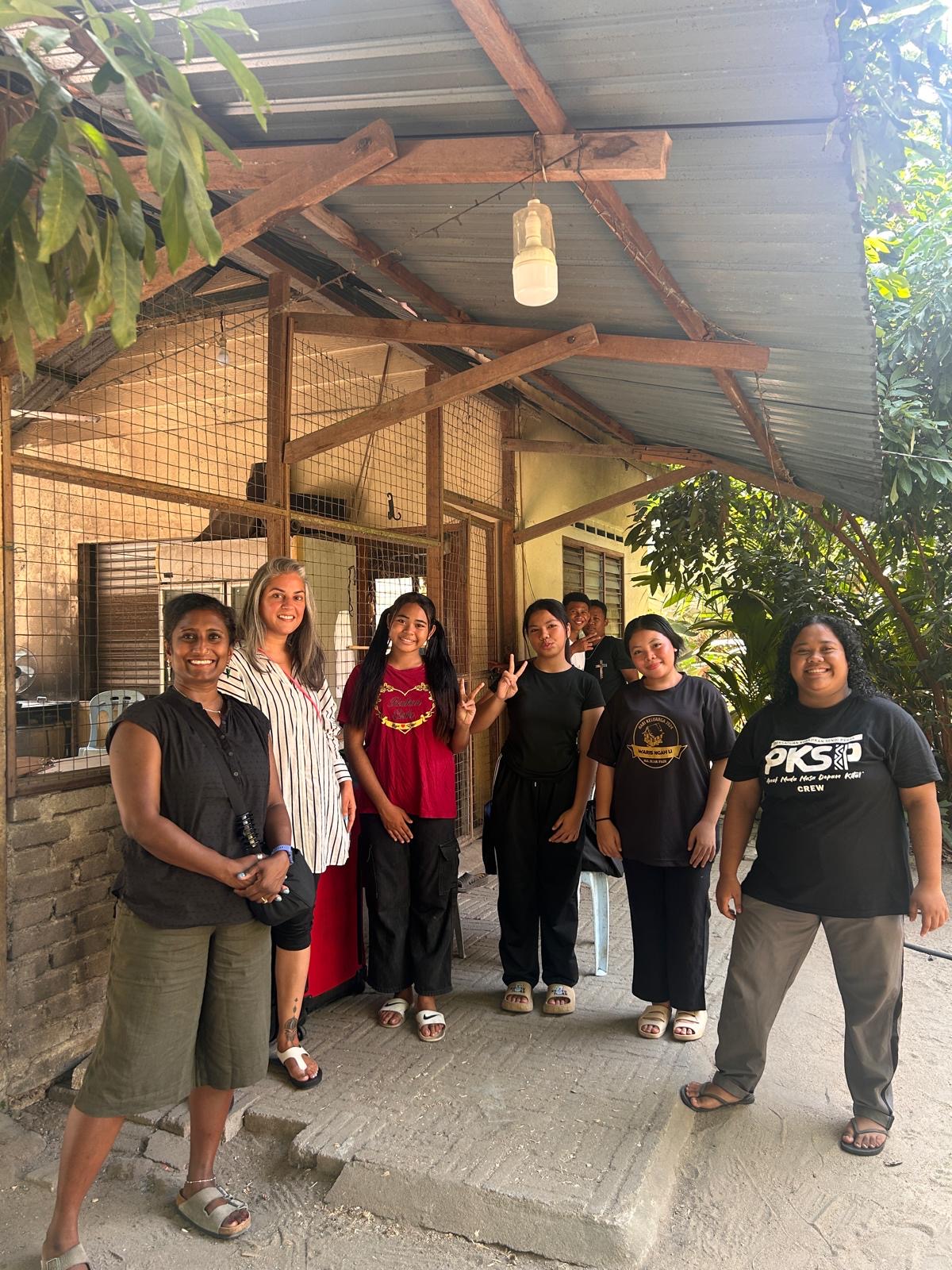
Dancestors brought Akademi together with Gerimis Arts and young members of the Orang Asli community in Malaysia in a truly meaningful collaboration. Following the project’s success, lead artist Jesal Patel and Akademi’s Artistic Director Suba Subramaniam hosted an online post-residency sharing on 3 December 2025, welcoming dance practitioners and researchers from across the field who share a passion for international collaboration and climate-related storytelling. A transcript from the session follows below.
Introduction
SS: My name is Suba Subramaniam, and I’m the Artistic Director at Akademi. With me today is Jesal Patel, a dance artist who worked on this project with Akademi.
Dancestors was conceived partly because of my own background. I was born and brought up in Malaysia and lived there until I was about 14. Since I was very young, I’ve had a deep fascination with the indigenous populations in Malaysia — their culture, livelihoods, art, and dance forms. That fascination stayed with me.
Then a British Council programme called Connections Through Culture gave us the opportunity to connect people through dance and place indigenous voices at the centre of a collaborative project. That’s where Dancestors began — with the aim of bringing together different dance forms and cultural practices.
The project involved a UK partner and a Malaysian partner. We worked with a wonderful organisation called Gerimis Arts. Wendi Sia, one of its directors, has spent a significant part of her practice working with indigenous populations in Malaysia — particularly the group we collaborated with, the Semai people.
Indigenous people in Malaysia are known as Orang Asli, meaning “people of the land.” Wendi has conducted extensive research and relationship-building with these communities, many of whom have lost their ancestral lands due to deforestation and plantations.
We also worked with Ronnie Bahari, whose work focuses on preserving Semai culture through music, dance, and instruments. For him, dance is a vital means of cultural survival. The young people he works with now perform internationally, including on World Indigenous Day. Even within Malaysia, Semai voices are marginalised. Many people are unaware of their culture — including my own family in Malaysia. That made this project feel especially important.
I’ll now introduce Jesal.
Jesal’s Practice
JP: Hi, I’m Jesal. I’m a Kathak dancer based in London, and I’ve been working with Akademi for over 25 years in various capacities. Earlier on, my work focused more on performance, but now it’s primarily educational — in hospitals, care homes, community centres, and special needs schools. I work with people of all ages and abilities, using Kathak as a base to encourage movement, connection, and enjoyment.
Early engagement & trust building
SS: The project began with a lot of conversation, trying to understand how to engage respectfully with a group for whom this kind of collaboration was new. They were used to performing and being taught choreography, but they had never worked collaboratively with artists from another country.
Wendi and I had many discussions about her research and the political, social, and cultural realities faced by the Semai people. I shared this context with Jesal, and we then had an initial Zoom meeting with the group. In that first Zoom, engagement was limited. Cameras were off, and there was reluctance to connect. It was important for us to say early on that we weren’t there to teach a dance routine. The focus was on their stories and voices, and on building trust.
Visiting the village
SS: When we arrived in Malaysia, the first thing we did was visit the village where the young people lived, to understand their environment and cultural background.
JP: The visit was very grounding. At first, even in the village, they were still reserved. But they showed us their rehearsal hut, a space where they sing, dance, practice, and meet. They explained how their land has been disrupted by plantations. Materials they once used for basket-making have disappeared. A lake they used for bathing no longer exists. That rehearsal hut felt like the only place where they truly came alive. They showed us their dances and instruments, many made from forest materials, and shared a sheet with around twelve set movements, each linked to animals or nature, like a deer.
SS: They also welcomed us warmly, bringing homegrown fruits like rambutan for everyone to share. From the moment we arrived until we left, someone was always dancing or playing music. We chose to work primarily with the younger group, which allowed them space to play and be themselves without pressure from older performers.
Workshop Process & Games
JP: We realised quickly that this was almost like a holiday for them, a break from daily routines like cooking, cleaning, and school.
We began with simple introductions, gestures, and icebreaker games. Communication relied heavily on movement and hand gestures rather than language. One day, we discovered a river behind where we were staying. Watching them play in the river was pure joy, it brought back memories of the lake they had lost. We began creating movement based on the river, using circular formations and mirroring.
SS: Early on, we decided to create a film, not of a final dance product, but of the process itself. The aim was to document what happens when Kathak meets an indigenous dance practice. The film centres the young people’s voices, experiences, and interpretations. Everyone involved including artists, filmmakers, carers, worked to ensure participants felt listened to, valued, and safe.
Choreographic exchange
JP: We began by learning their movements: grounded and rhythmic, before sharing basic Kathak elements like hand gestures and footwork. Their synchronisation was extraordinary. They moved as one because they had grown up together.
To encourage creativity, I introduced a visual art task: drawing their dreams and ambitions. From those drawings, we created movement through storytelling and action. This was the first time many of them had been asked about their hopes and dreams. It took time, but eventually, they created their own movement material, which fed into the final choreography.
Language & Communication
JP: Language was a challenge. Initially, communication was entirely physical. But over time, through breaks, TikTok, music, and shared laughter, we became more confident in communicating with each other.
SS: Understanding why we were asking personal questions was difficult for them at first. But once they understood that the work was about them, trust grew.
Disco Night & Freedom
JP: On one evening, energy dropped especially when older dancers joined. So, we held a disco. They shared their favourite songs, danced freely with scarves, and completely let go. It showed me how much movement potential they had!
Reflections
SS: Jesal, what were your biggest takeaways from this project?
JP: Flexibility. Creating a balance between structure and freedom. Creating a safe space. And helping participants gain confidence in their own creative voice. This experience has deeply influenced my practice, especially in special needs and care settings.
“Thank you for sharing this work. It’s fascinating and deeply moving to hear about your experience in Malaysia and your collaboration with a group whose voices and practices are rarely seen in mainstream contexts.”
Audience Feedback
Question and answers
How did you identify and connect with this particular group in Malaysia? What drew you to them, and how was the relationship established?
SS: This project was supported by the British Council through the Connecting Through Cultures fund. We applied specifically to work in Malaysia, partly because I was born and brought up there, and indigenous voices within Malaysia have long been a personal and professional interest of mine. That connection formed the initial starting point for the project.
Through the British Council, we were introduced to several organisations already working closely with indigenous communities in Malaysia. This led us to Gerimis Art and to Wendi, its director. Wendi is a researcher whose work focuses on indigenous culture, practices, politics, and social justice in Malaysia. During our conversations, she shared that she had been working for many years with a group of Semai young people who were central to her research.
Wendi has spent a long time building trust and meaningful relationships with this community—work that does not happen quickly or easily. She has also worked closely with Ronnie Bahari, who set up the group and has been instrumental in preserving Semai music and dance practices. It was through Wendi’s relationship with the group, and with their consent, that we were able to begin working together. Wendi made the initial introduction and supported the process throughout, which was vital in ensuring the collaboration was respectful, ethical, and grounded in trust.
Have you considered extending this approach to other indigenous practices—particularly within South Asia, or through a British lens that explores indigenous traditions, climate rituals, and relationships to land? How might this work develop in the future?
SS: Akademi has been increasingly engaging with these questions. We were part of a wider research project titled South Asian Dance Equity, funded by the Arts and Humanities Research Council (AHRC), which examined equity within South Asian dance. One of the key areas explored in that research was indigenous voices and Adivasi dance practices.
Following the conclusion of that project, Akademi was invited to run a small subgroup focused specifically on indigenous practices within South Asia. Our focus was primarily on Indian indigenous dance forms and understanding how these practices have been affected by climate change.
As part of this work, we brought together researchers working with Nepalese folk forms and practitioners from Himalayan regions, where dance practices have been deeply impacted by environmental changes, shifting landscapes, and broader social and political transformations. Through this, we’ve begun to actively explore indigenous dance, knowledge systems, and cultural practices in greater depth.
While we haven’t yet explored these ideas through a specifically British indigenous lens, the themes you mention—climate, land, ritual, and tradition—sit very much at the heart of Akademi’s current thinking. Sustainability, climate change, and indigenous voices are increasingly central to our work, and we see these areas as deeply interconnected. This is an ongoing area of exploration for us, and one we are keen to continue developing thoughtfully and responsibly.