Conference report | Reach Out and Reveal: Exploring the impact of South Asian dance in SEND education
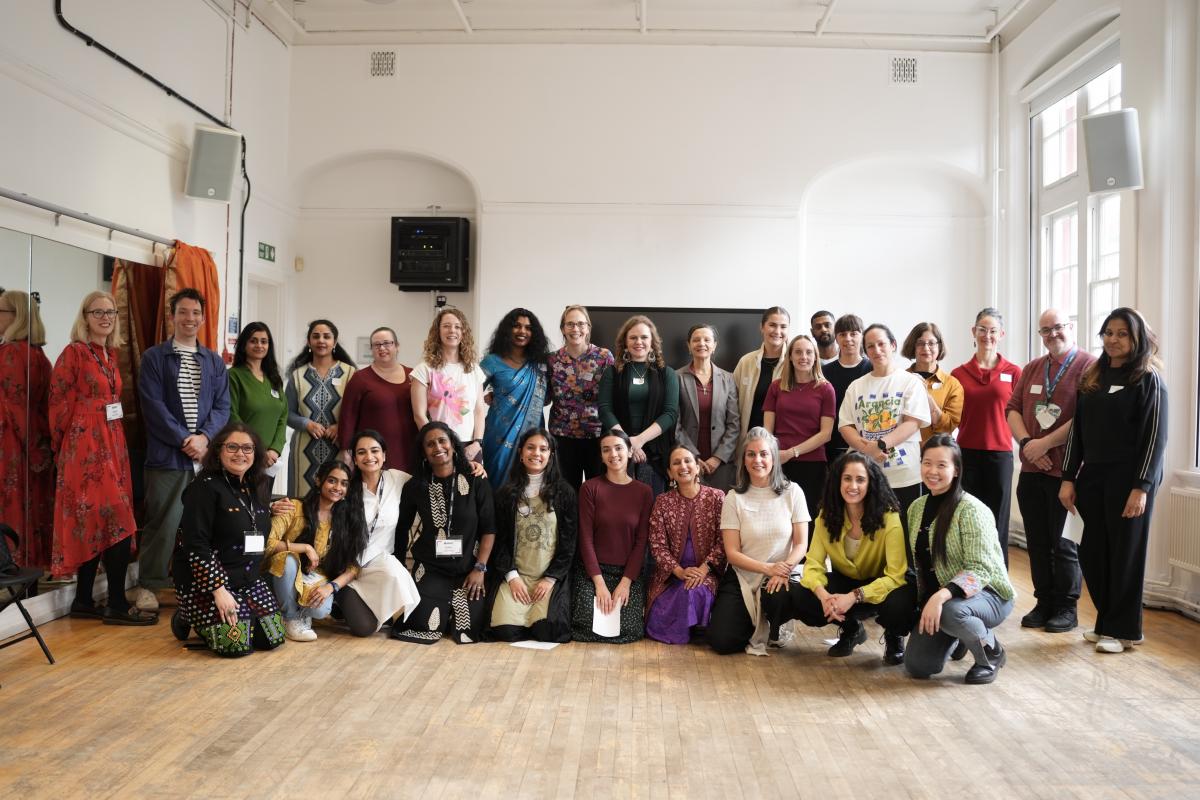
Artist Jane Chan reports on Akademi conference, ‘Reach Out and Reveal: Exploring the impact of South Asian dance in SEND education’ that took place at The Place on 13 March 2026.
Introduction
Suba Subramaniam, Artistic Director and Joint CEO of Akademi opened the conference by welcoming participants and introducing the organisation’s team, while outlining key practical information for the day. The session established an informal and collaborative atmosphere, encouraging attendees to engage openly and connect with one another.
The conference brought together practitioners, educators and organisations with a shared interest in SEND (Special Educational Needs and Disabilities) education and inclusive arts practice. The focus was Akademi’s pilot project, RoAR, launched in 2018, which places South Asian dance artists in SEND schools with the aim of embedding creative practice within the everyday culture of the school.
Supported by a three-year grant by Paul Hamlyn Foundation, the project has examined the impact of South Asian dance in SEND educational settings.
The conference aimed to share reflections and findings from this work, provide perspectives from the artists, schools, teachers and students involved, and create space for participants to exchange ideas, build professional connections, and reflect on the role of arts practice in supporting inclusive education, particularly in light of current discussions around reforms to the SEND system in the UK.The welcome was followed by a short breathing and warm-up session led by Kavya Iyer Ramalingam, Programme Producer at Akademi. Participants were guided through breathing exercises and gentle stretches designed to centre attention, encourage relaxation and create a shared sense of presence. This embodied start to the day reflected the conference’s focus on wellbeing, inclusivity and the role of movement and dance in fostering supportive and accessible learning environments.
Keynote Session by Dr. Irina Roncaglia
Dr. Irina Roncaglia’s keynote explored the central question: “Why does dance matter?” Drawing on research and professional experience, she examined the role of dance in supporting physical, mental and social wellbeing. Referencing the definition of health by the World Health Organization, she highlighted how dance uniquely combines artistic expression, physical activity, cognitive engagement and social interaction. Unlike many forms of exercise, dance simultaneously engages memory, coordination, spatial awareness and emotional expression, contributing to improved physical health and neurological development.
Dr. Roncaglia also discussed research demonstrating the wider benefits of dance participation, including improved mood, stress reduction, increased confidence and stronger social connection. Evidence from health and arts research suggests that dance participation can enhance wellbeing across both clinical and non-clinical populations and may complement other therapeutic or medical interventions.
A significant focus of the keynote addressed the role of dance within Special Educational Needs and Disabilities (SEND) contexts. Drawing on her work with neurodivergent learners, she described how dance can support communication, emotional regulation and social interaction, particularly for individuals who may be pre-verbal or experience differences in sensory processing. Dance provides a non-verbal mode of expression, enabling participants to communicate through movement and shared creative activity.
She also shared insights from earlier research projects exploring drama within educational settings for autistic learners. These studies demonstrated that structured, collaborative creative activities could encourage engagement, improve communication and foster a sense of belonging among participants. Emphasising relational and responsive teaching approaches, she highlighted the importance of creating supportive learning environments where teaching artists meet learners at their individual level of ability and experience.
The keynote concluded by reaffirming dance as a meaningful and inclusive practice that can foster joy, agency, belonging and wellbeing. Participants were invited to reflect on their own experiences of dance and consider how movement-based practices can be advocated for as a lifelong partner for health, learning and social connection.
Paper presentation by Claire Farmer & Dr. Ashley Brain, the researchers for RoAR
This paper presents a 3-year investigative study into the impact of dance influenced by South Asian styles for autistic young children in SEND schools. Led by Claire Farmer and Dr Ashley Brain, the project integrates artistic practice with research to explore how South Asian dance can support physical, emotional, and communicative development.
Addressing gaps in existing literature particularly the focus on deficits and clinical methodologies, the study adopts a mixed-methods, collaborative approach involving dance artists, teachers, and parents. Dance sessions were delivered weekly in familiar school environments, either one-to-one or in small groups, and incorporated elements of South Asian dance such as rhythm, gesture (mudras), and coordination-based movement.
Data collection included curriculum-based assessments, video analysis, dance artist logs, and Strengths and Difficulties Questionnaires completed by teachers and parents. A key strength is that, while the sample size may be small by traditional scientific research standards, the emphasis on qualitative evidence is both appropriate and necessary given the pupils involved and the context-specific aims of the study. Findings also highlight the importance of individualised analysis, with outcomes varying across participants. Dance supported non-verbal communication, engagement, and motor skill development, while qualitative insights revealed nuanced progress not captured through quantitative measures alone.
The study demonstrates the value of arts-based, context-sensitive approaches in SEND settings and advocates for embedding research within practice. It contributes to a growing evidence base supporting dance as a meaningful intervention for autistic learners.
Background and Rationale
Autism is a neurodevelopmental condition that affects communication, emotional regulation, social interaction, and sensory processing. Experiences vary widely between individuals and across time.
Some key gaps identified in existing research:
- Emphasis on challenges rather than strengths
- Limited focus on dance as an artistic and community practice
- Heavy reliance on clinical, quantitative methods that may lack real-world relevance
This study responds by adopting a more holistic, inclusive, and context-sensitive approach.
Project Aims
The research aimed to investigate how dance classes could support autistic children in:
- Engagement and participation
- Functional and daily life skills
- Communication and social interaction
A core principle was recognising each child as an individual, avoiding generalised group analysis.
Methodology
A mixed-methods approach combined quantitative measures with rich qualitative insights.
Key Features
- Conducted in SEND school environments to ensure familiarity
- Co-designed with:
- Dance artists
- Teachers
- Parents
- Flexible and adaptive delivery based on children’s needs
Participants
- Children aged approximately 6–8 years
- Research conducted across multiple schools (with a focus on two)
- Participation in research was optional alongside dance sessions
Dance Intervention
- Weekly sessions (10–30 minutes)
- Delivered one-to-one or in small groups
- Inspired by South Asian dance styles, incorporating:
- Rhythmic footwork
- Use of props
- Hand gestures (mudras)
- Coordination and balance exercises
Data Collection Methods
Four main strands were used:
- Curriculum Progression
- School-based assessments of academic and daily life skills
- Video Analysis
- Observations of engagement, independence, and behavioural change
- Dance Artist Logs
- Detailed qualitative reflections capturing embodied progress
- Strengths and Difficulties Questionnaire (SDQ)
- Completed by teachers and parents to assess behaviour and emotional wellbeing
Future Directions
- Broader dissemination to educators, practitioners, and families
- Continued development of inclusive research methods
- Advocacy for dance in health and education policy
Conclusion
This 3-year study highlights the potential of South Asian–influenced dance as a meaningful, accessible intervention for autistic children in SEND schools. It underscores the need for holistic, flexible, and collaborative research approaches that capture both measurable outcomes and lived experience.
Panel Discussion: Claire Farmer, Georgia Cornwell, Alan Miller (Assistant Head Teacher and Enrichment Lead at Manor School) and K (participant)
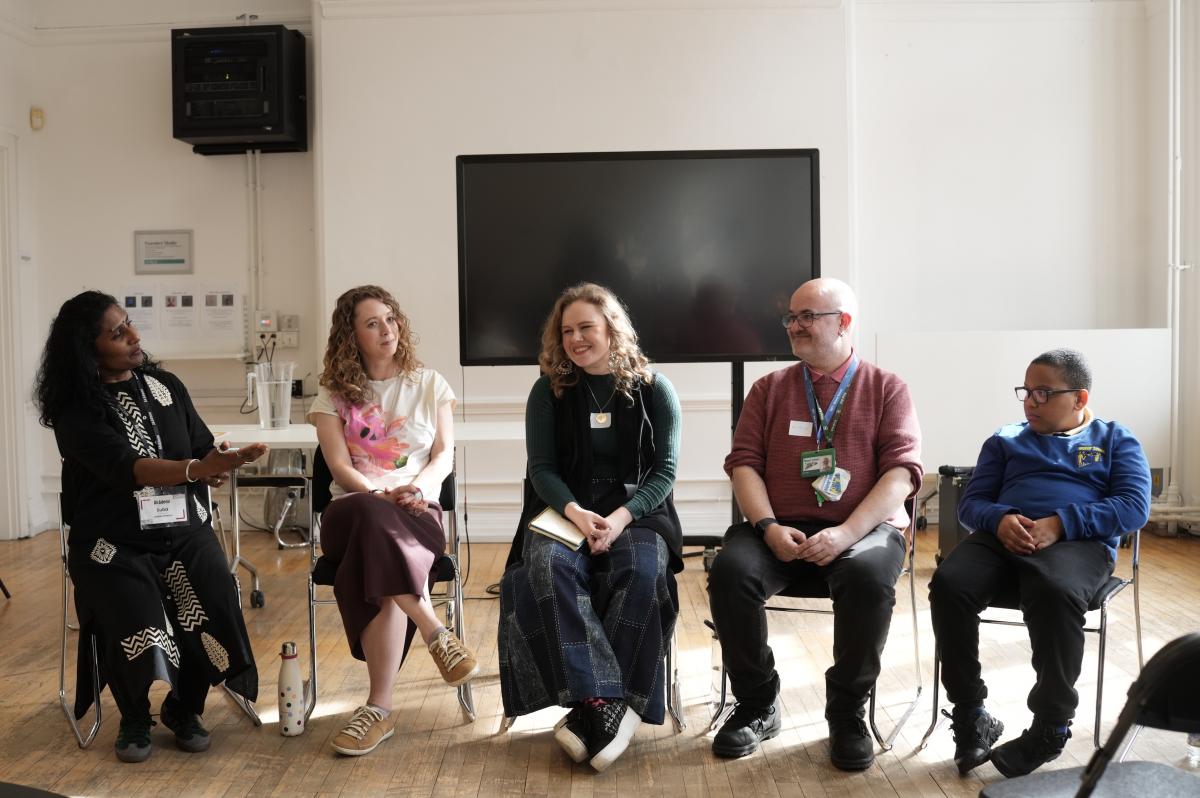
The panel explores the impact of inclusive dance practice in a SEND setting, specifically focusing on perspectives from a dance artist, a student, and a school leader.
Dance Artist Perspective
- Georgia, an inclusive dance artist, explains how this work has deeply influenced her practice, particularly through one-to-one and small group engagement rather than large classes.
- Sessions are highly flexible and personalised, adapting to each child’s needs, mood, and communication style.
- Activities include warm-ups, creative exercises (e.g., “pass the move”), storytelling, and yoga-inspired cool-downs.
- She emphasises that progress is non-linear and requires patience and adaptability.
- Memorable impacts include:
- A previously non-verbal child begins to speak and communicate through movement.
- Gradual engagement from children who initially resisted participation.
- Improvements in focus, creativity, and confidence through consistent routines.
Student Perspective
- K shares that he enjoys:
- Learning and picking up dance moves quickly
- Dancing with friends and participating in group activities
- Music and styles he recognises, such as Michael Jackson
- His contribution highlights the enjoyable, social, and motivating nature of the sessions.
School Leader Perspective (Assistant Head / Enrichment Lead)
- The school places strong emphasis on enrichment beyond academics, especially for pupils with complex needs who may not enter employment.
- Creative activities like dance are vital for:
- Breaking down communication barriers
- Revealing abilities not visible in traditional classroom settings
- A powerful example includes:
- A pupil who is perceived as having very low ability demonstrating high skill and stability through dance session, despite limited verbal communication.
- The school fully supported a 3-year research project exploring how dance improves communication and access.
Impact of the Programme
- Observed outcomes for pupils include:
- Greater independence (e.g., moving confidently around school)
- Improved focus and engagement
- Enhanced communication and expression
- Success depends on time, trust, and consistent relationships, rather than quick interventions.
Collaboration & Sustainability
- The programme is built on strong partnerships between the school and Akademi.
- Emphasis on mutual value exchange, including:
- Financial contributions where possible
- The school offering training (e.g., communication methods like Makaton) in return
- The model has expanded into other activities (e.g., drumming, basketball) using similar inclusive approaches.
- Focus on long-term collaboration, shared expertise, and sustainable funding.
Key Takeaways
- Inclusive dance can unlock hidden potential in pupils with special educational needs.
- Individualised, adaptive teaching is essential.
- Creative arts play a critical role alongside academics in pupil development.
- Sustained partnerships between schools and practitioners are key to long-term success.
The day concluded with a Q&A session involving conference participants, followed by an interactive movement workshop led by dance artists Jesal Patel and Mithun Gill. During the session, they shared elements of their practice, giving participants a hands-on experience of the activities they use when working with SEND learners.
Feedback on the day:
Conference attendees:
- Hearing from the school leaders and a pupil was super useful.
- This (conference) is great insight into research, much needed in the community particularly in the SEND sector.
- Session confirmed much that we know already but having the findings in a written report is extremely useful for evidence for funding and approaching SEND schools.
Dance artists:
- There is a real sense of solidarity today.
- South Asian dance, its impacts and value [that we know of so well] is finally being centred and celebrated today
- As an artist, it was really good to connect and see what other artists’ experiences and ways of working are.
- As an artist, it was great to see how those involved in the work were brought to the forefront and their experiences were highlighted.
- It was lovely to see so much work being done at the intersection of dance and health. I felt very inspired and the learnings hit a chord as the impact of dance on my wellbeing is the reason why I teach!