Suba’s blog | Research trip to India, Jan-Feb 2026
Earlier this year, our Artistic Director, Suba Subramaniam, was in India on a research trip. She shares her experiences and insights from the trip.
I travelled to Bangalore to explore the potential for a future collaboration with Attakalari, their dancers, and Jaychandran, with the aim of understanding their artistic practice, training programme, and creative processes in developing contemporary South Asian dance work.
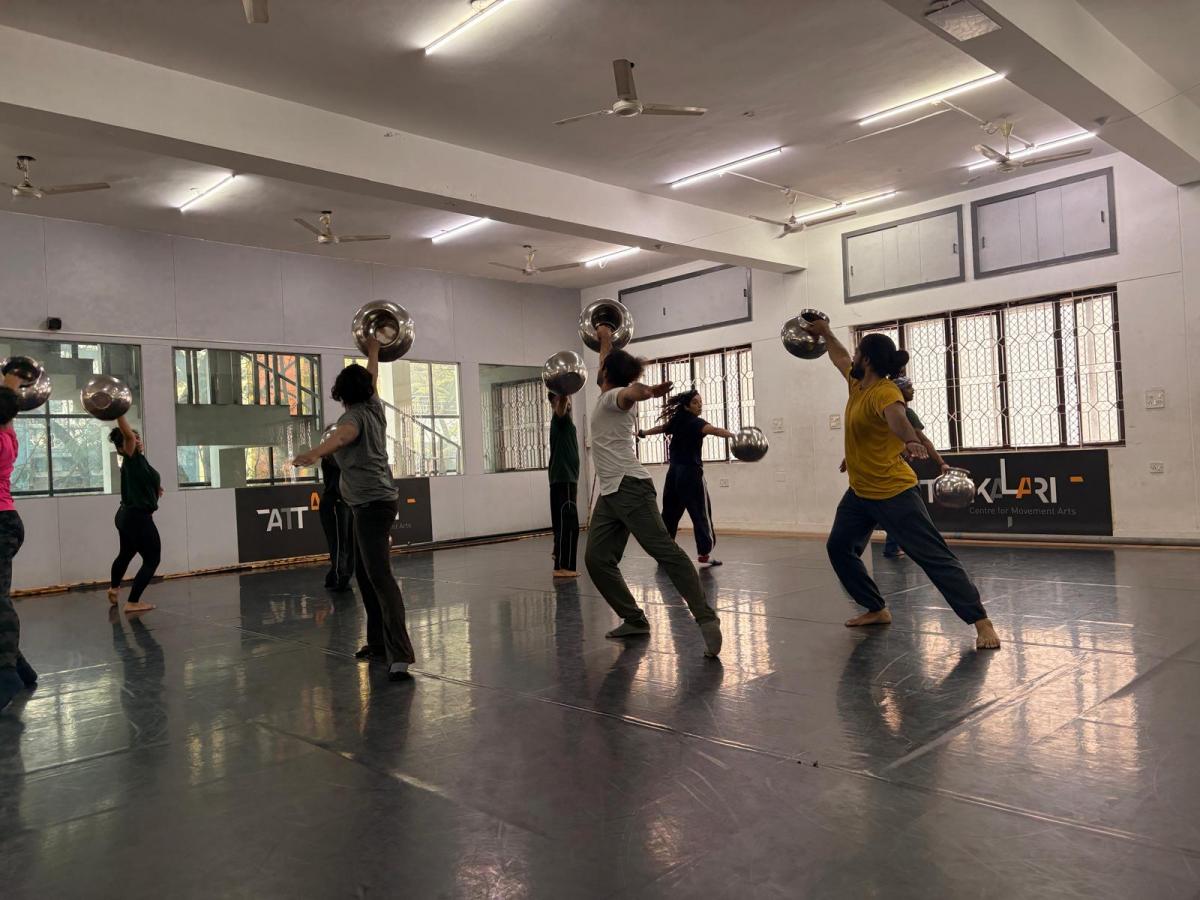
A significant part of the visit involved observing rehearsals for their 25th anniversary production. This provided an opportunity to see how the organisation structures its rehearsal environment, communicates choreographic ideas, and integrates performers into the creative process. I was able to witness how material was developed, refined, and contextualised within the company’s broader artistic identity.
The visit also brought into focus differences in training infrastructure for South Asian dance forms between India and the UK. The dancers demonstrated a high level of technical consistency and physical conditioning, suggesting sustained and rigorous training pathways. Training provision in the UK is strong and offers valuable foundations; however, what stood out was the presence of a sustained, full-time training environment that allows space not only for technique, but also for physical conditioning and complementary forms such as Kalaripayattu.
I am aware that conversations around sustained and rigorous training for South Asian dance are longstanding, but seeing firsthand what this kind of structure can produce – cohorts of dancers working at a high level with dance companies brought the question back to the forefront of my thinking.
I was also invited to host their 25th anniversary gala, a slightly nerve-racking prospect, but a genuine honour. Being asked to hold the space for such a significant occasion, guide the evening, and acknowledge the many contributors involved meant navigating a long list of thank-yous and some wonderfully complex South Indian names, which added to the sense of responsibility. The event ran smoothly, and the response was warm and appreciative. By the end of it, I felt not only relieved but also more deeply connected to the artists, organisers, and community members I’d had the pleasure of spending time with, which made the experience particularly meaningful.
Artistically, there were clear overlaps between the themes they were exploring and those present in our own work. Conversations during the visit indicated shared interests in narrative, form, and cultural context within contemporary practice. These points of alignment made me feel very positive about future collaboration. It does not always have to be about the co-creation of work but could prioritise the exchange of practice and knowledge and work in creative health for example.
Overall, the visit functioned as a focused period of observation and learning. It expanded my understanding of contemporary dance practice in Bangalore and offered useful reference points for thinking about training, collaboration models, and international partnership development going forward.