Blog | Kesha Raithatha (Artist Commissions)
Kesha Raithatha
Akademi Artist Commissions recipient, Kesha Raithatha, shares the creative journey behind her new project The weight of All Things.
I began this commission with an instinct around garments, inheritance and our relationship to clothing. Two residency weeks later – first at DanceEast and then at The Place – I feel less interested in arriving at an answer than I am in how much the question has expanded.
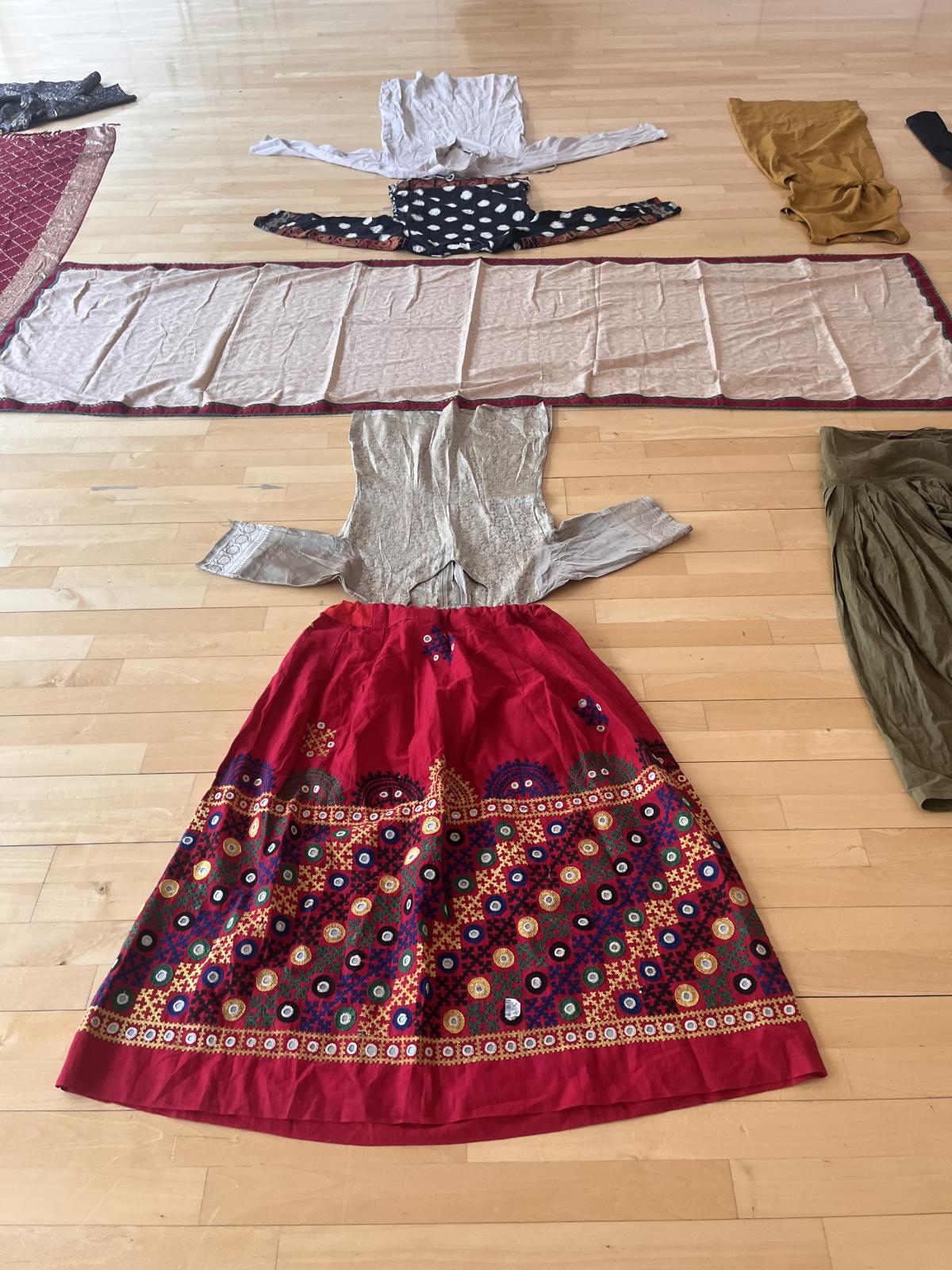
I have been working with garments as living archives: hand-me-downs, vintage pieces and fabrics that carry bodies, labour, memory, lineage and cultural knowledge. Alongside this sits my research into enclothed cognition – the idea that what we wear can actively alter behaviour, posture, identity and even how we understand ourselves.
Through a contemporary South Asian lens, I’m interested in the beautiful complexity of inherited clothing cultures: the richness of detail, craft, colour and meaning; the passing of garments between generations; and the very modern South Asian instinct to mix, restyle and play between cultural worlds. There is quirkiness and pleasure here too. Through various tasks and improvisation, Aishani and I have found moments of humour, strangeness, dressing up and transformation, and the work currently exists as a series of vignettes rather than one resolved narrative.
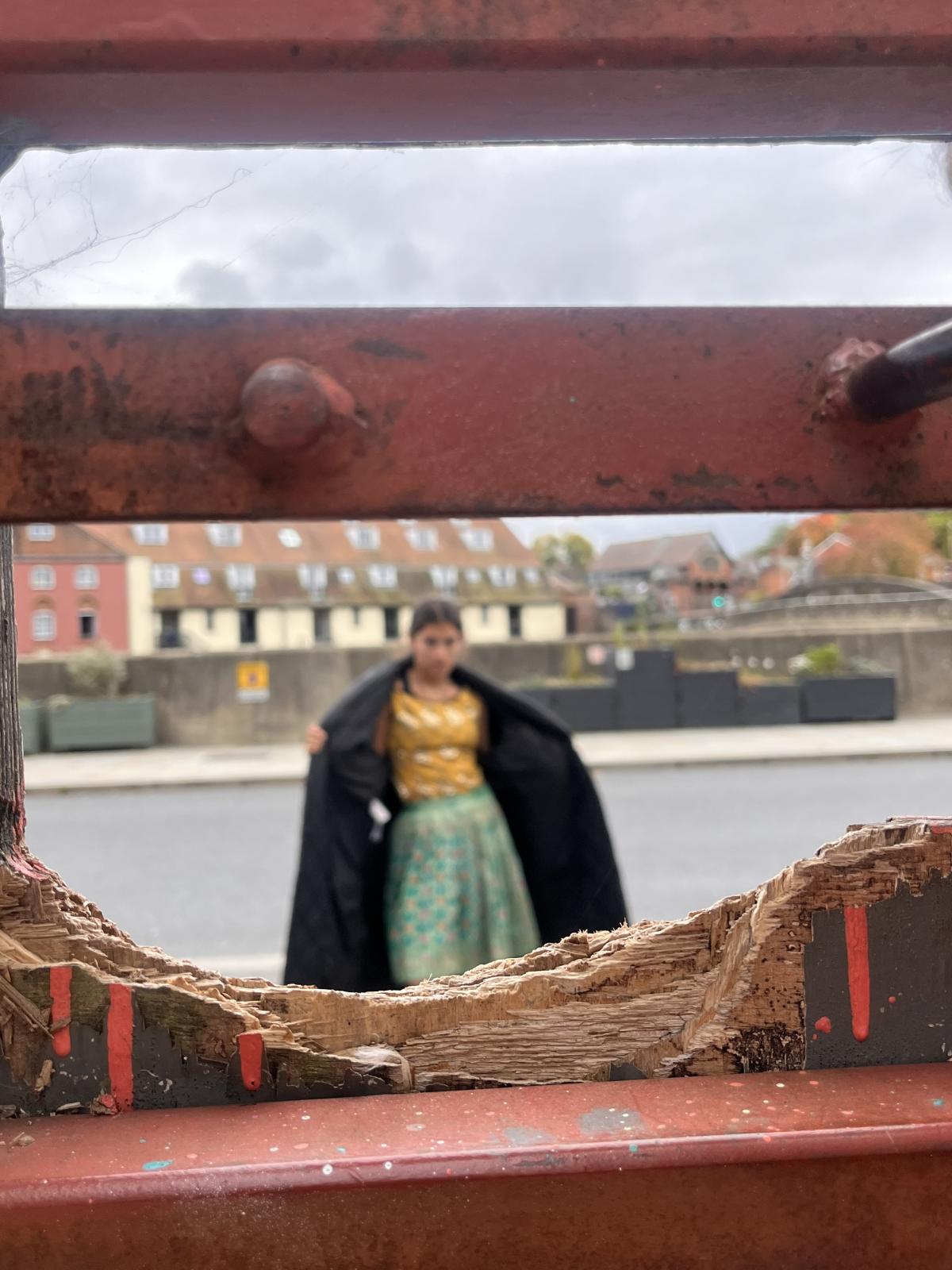
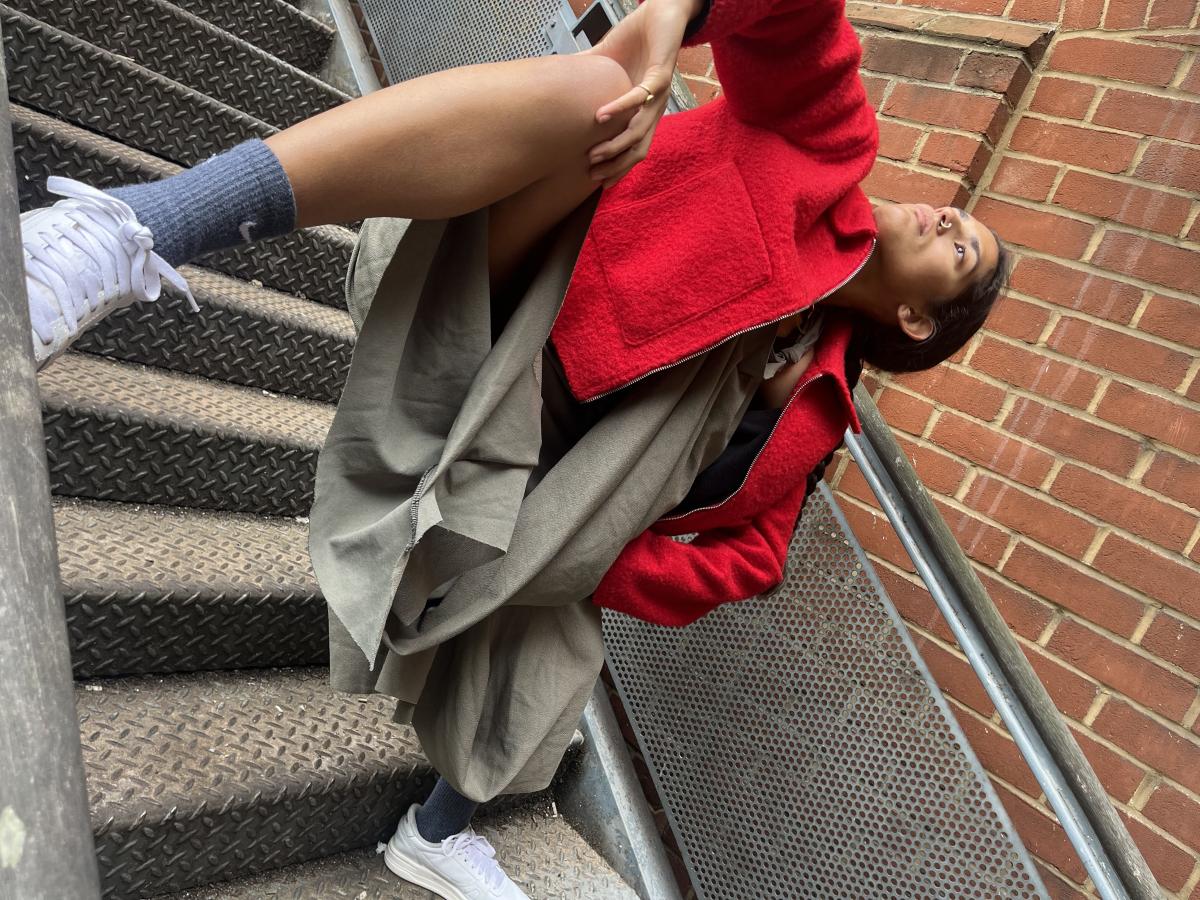
But underneath this playfulness, I keep encountering weight — another narrative beginning to pull at the seams.
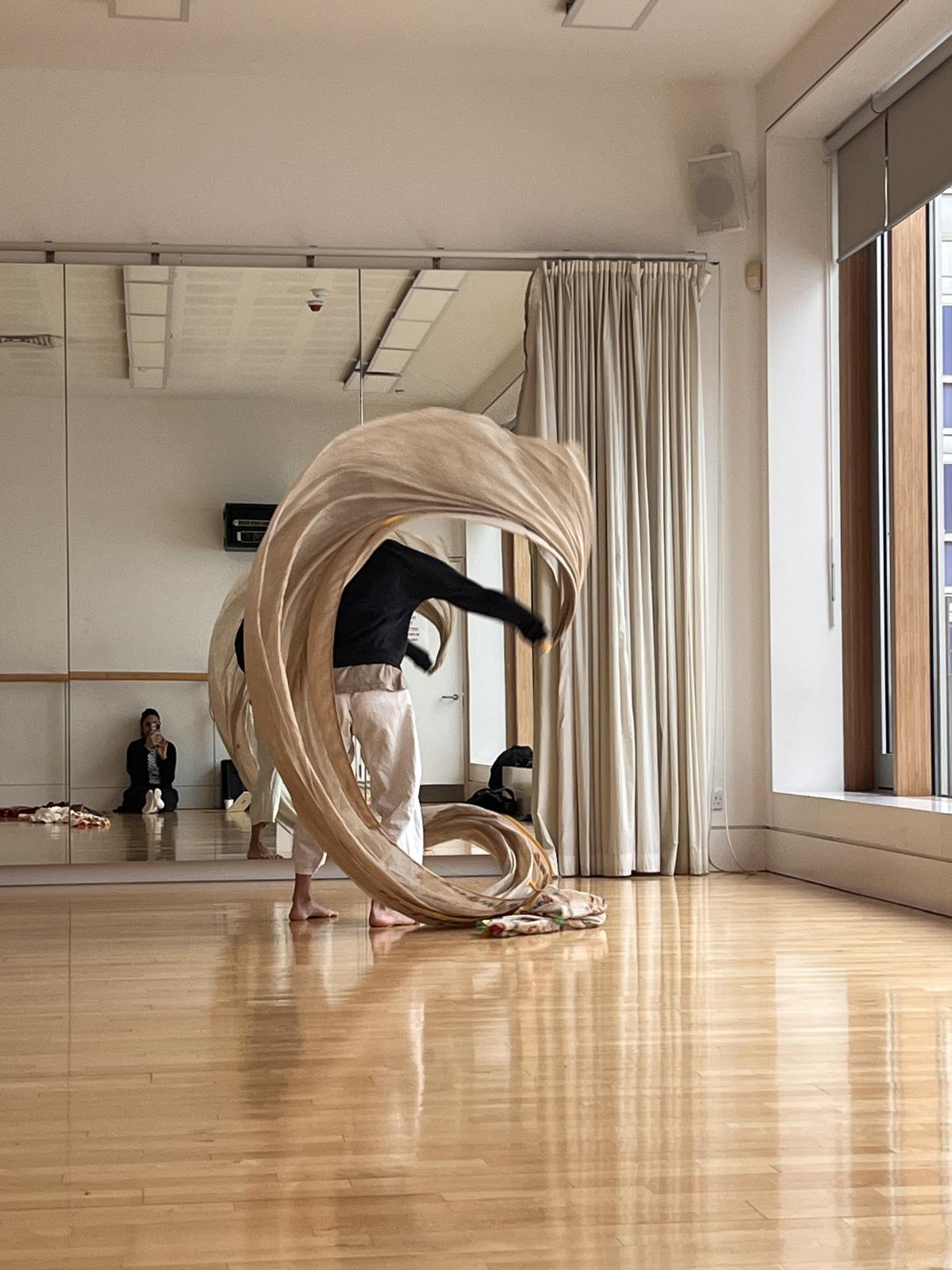
There is the weight of cultural inheritance and the colonial histories that disrupted, extracted and redefined textile traditions and their origins. Then there is another, very physical weight: labour. Wise, ancient hands that wove, dyed, stitched, washed; the repetitive action of a factory; and now the extraordinary scale and speed of mass production. In the studio, fabric has become something to drag, gather, slap, carry, shed and become entangled within. At moments, an inherited cultural weight and the weight of industrial labour begin to occupy the same body.
Something deeper has started emerging from this. Historically, cloth belonged to a living cycle: fibres were grown, harvested and dyed from the earth; garments were made, worn, repaired, altered, handed down, and ultimately capable of returning to the earth. The body too belongs to that cycle. The hands making the cloth, the person wearing it, the plants and materials it came from – all eventually return.
That is where the thought “we are wearing each other” emerged. Not as something morbid, but as an understanding of clothing as life passing through life: we wear somebody’s labour, somebody’s knowledge, something grown from the earth, sometimes somebody else’s memories. Yet we have created systems in which that cycle is increasingly broken – synthetic, extracted, disposable and permanently unresolved. I think I have found an emotional engine somewhere inside that rupture, although I am still discovering exactly what it is.
Working with Aishani, garments became weight, skin, shelter, burden, pleasure and resistance. We created movement, images and films throughout the process, and I’m increasingly curious about whether this piece of work ultimately wants to exist beyond a conventional stage: as site-specific work, film, installation or an immersive encounter between bodies, clothing and space.
That uncertainty feels important. Akademi’s commission gave me permission not to prematurely make a ‘piece’, but to begin finding the world it might belong to.